Converse, Hello Fresh and Colgate University all face accessibility lawsuits
Sep 15 2022
Our weekly roundup of recent ADA litigation cases
This week we focus on two more big names, and Hamilton based Colgate University.
Once again, plaintiffs maintain that the websites in question do not provide full accessibility for blind or visually impaired people, denying them access to goods and services.
What type of organizations escape ADA claims?
The range of names listed in this week’s article demonstrate that there are very few organization types that are safe from the risk of a lawsuit based on a lack accessibility.
In the case brought against Converse, Section 11 of the complaint highlights the defendant’s physical stores in order to demonstrate the need for ADA adherence:
*Because Defendant is a store open to the public, each of Defendant’s physical stores is a place of public accommodation subject to the requirements of the ADA, 42 U.S.C. §12182, §12181(7)(E), and its implementing regulations, 28 C.F.R. Part 36.
Ariza v. Converse Inc.
In contrast, Hello Fresh has become well known for an online model that involves the consumer visiting their website to order the regular delivery of meal kits and groceries. Section 4 of the Class Action Complaint against Grocery Delivery E-Services USA, the owner of the brand/website, recognises this is an online business but references the organization’s physical locations to apply rights under the ADA:
*Defendants’ denial of full and equal access to its website, and therefore denial of its products and services offered, and in conjunction with its physical locations, is a violation of Plaintiff’s rights under the Americans with Disabilities Act (the “ADA”).
Brown v. Grocery Delivery E-Services USA, Inc.
Isolation and Stigma
The case brought against Colgate University in Hamilton, New York, has been settled. The plaintiff had complained that the incompatibility of the University’s website to screen readers made the sports programs inaccessible to her and other visually impaired people.
Miller v. Colgate University
As part of the case, Miller gave some insight into the feeling the lack of inaccessibility created. It was stated that by Colgate not providing equal accessibility for blind and visually impaired as for the sighted increases “the sense of isolation and stigma among those persons that Title III was meant to redress.”
Subscribe to AAAtraq and enjoy complete cover and peace of mind
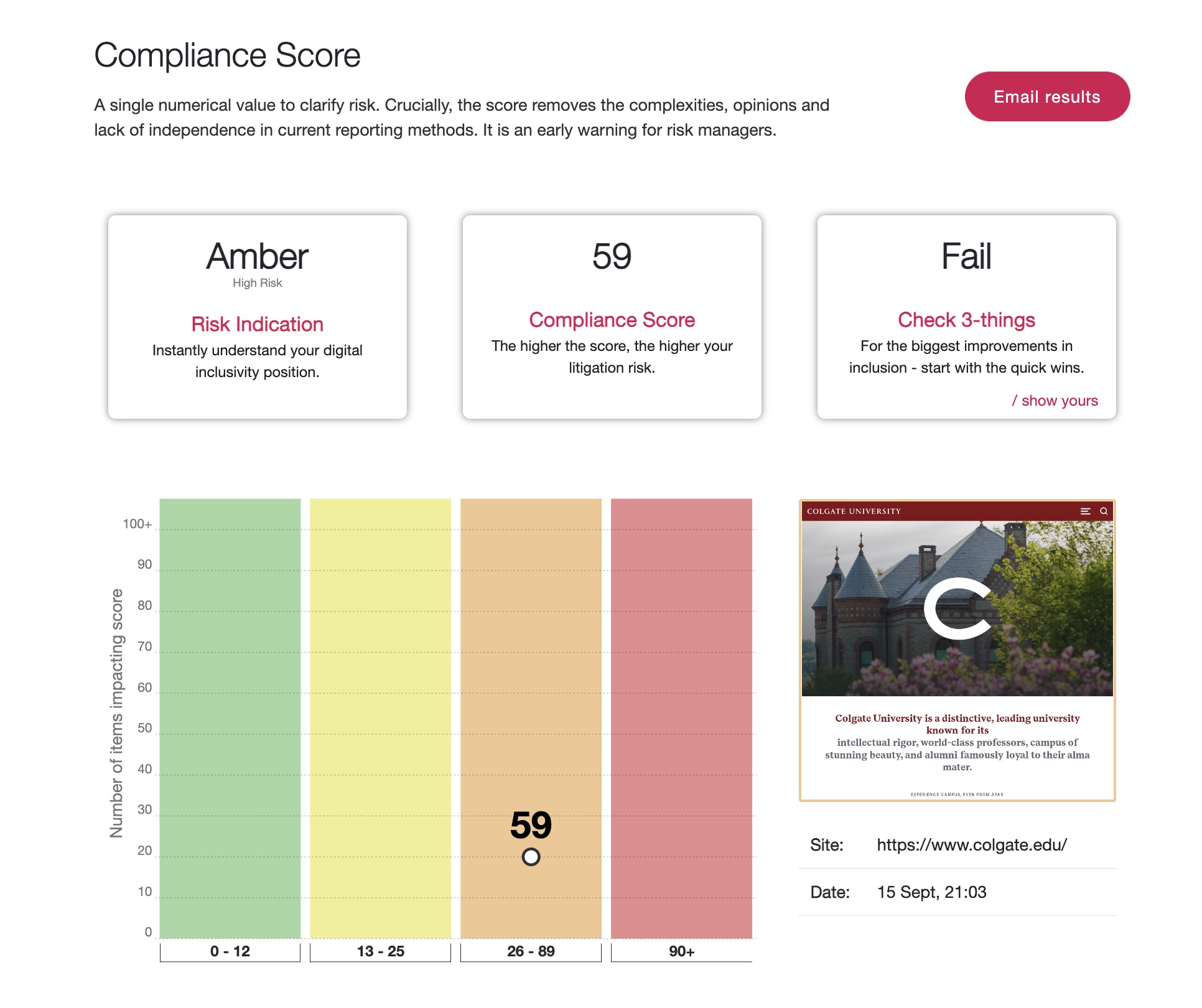
https://www.colgate.edu/ (opens in a new window) had a Compliance Score of 59 and ‘Amber’ (High) Risk Indicator at the time of writing.
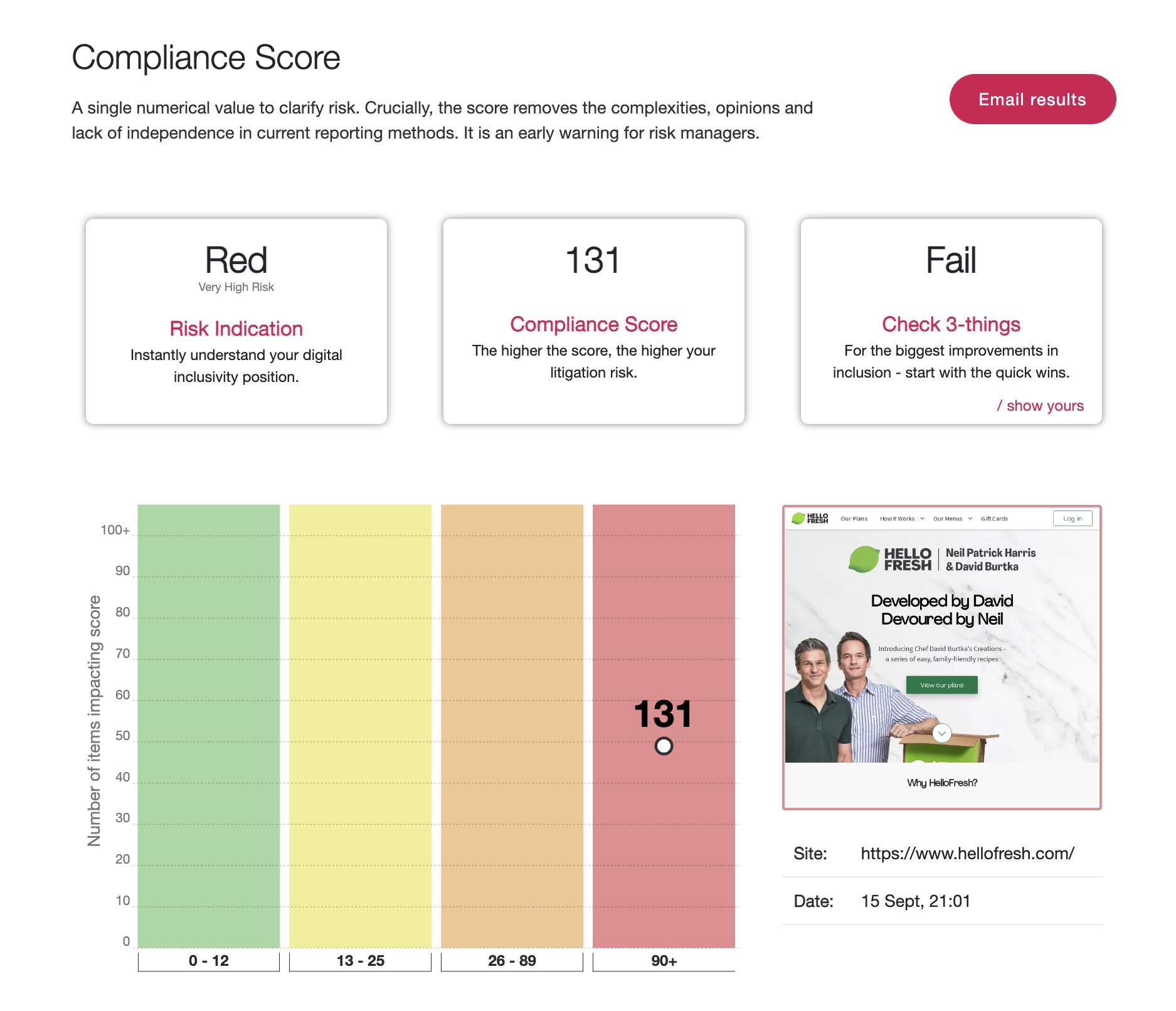
https://www.hellofresh.com/ (opens in a new window) had a Compliance Score of 131 and ‘Red’ (Very High) Risk Indicator at the time of writing.