No intention of booking hotel room, but plaintiff still entitled to take action
Oct 13 2022
Our weekly roundup of recent ADA litigation cases
This week, more retailers face litigation and a hotel chain finds that the case brought by a self-proclaimed ‘ADA Tester’ is permissible despite them not wishing to stay.
Guess which retailers are facing action for inaccessible websites?
Fashion brand and clothing retailer, Guess, is facing action from a plaintiff who claims the defendant’s website contains barriers that prevents the ‘free and full use by blind and visually disabled individuals.’
The plaintiff has disabilities that means he relies upon the keyboard and a screen reader software, but the barriers preventing that include (but are not limited to):
- The homepage button/company logo being mislabelled
- The submenus being inaccessible when navigating with the keyboard.
- The product sizes not having proper labels
- Price and size chart inaccessible for selected item
Fernandez v. Guess? Retail, Inc.
Modshop, the physical and online furniture boutique has seen a class action brought against them for failing to maintain and operate https://modshop1.com/ (opens in a new window) in a way that makes it fully accessible for herself and other blind or visually-impaired people.
The Modshop class action states that the ‘plaintiff brings this civil rights action, individually and on behalf of those similarly situated, seeking redress for Defendant’s actions which violate the ADA.’
Rafia Lawal v. Spot International Inc.
Hotel action has standing despite no intention of plaintiff staying
In an interesting Court of Appeals case, the first circuit concluded that despite the plaintiff having no intention of using an Acheson hotel, and being a self-proclaimed ‘ADA Tester’, she did have standing to sue in federal court.
The case had previously been dismissed; however, circuit judge O. Rogeriee Thompson said that three facets related to Article III of the Constitution needed to be satisfied, but they were focused on ‘injury in fact’, defining it as:
‘the invasion of a legally protected interest that is concrete and particularized and actual or imminent, not conjectural or hypothetical.’
In this instance the First Circuit concluded the plaintiff had standing to sue, with Thompson writing:
‘That is, a plaintiff’s deliberate choice to see if accommodations are obeying a statute doesn’t mean that her injury in fact is any less real or concrete.’
Subscribe to AAAtraq and enjoy complete cover and peace of mind
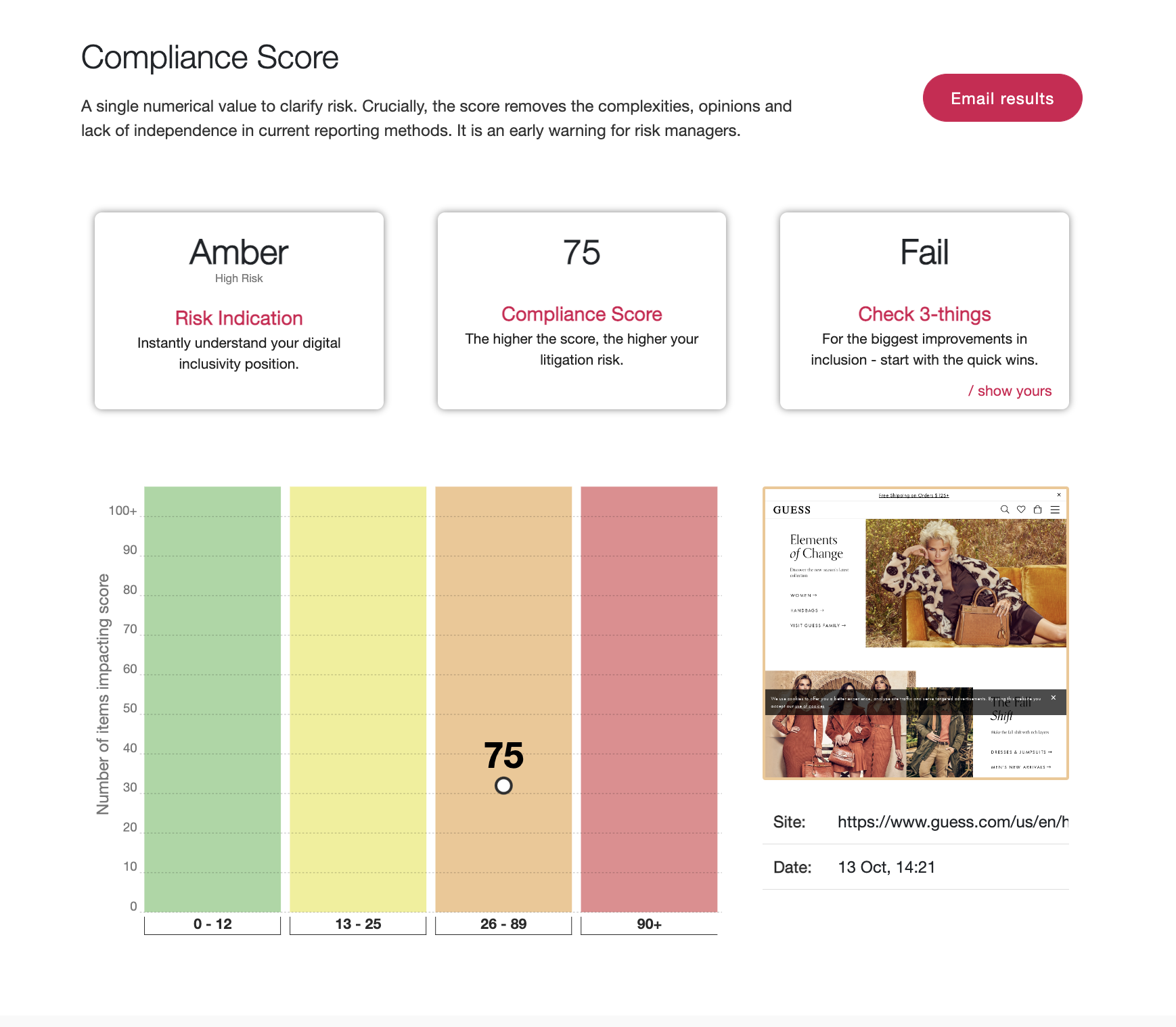
Guess (opens in a new window) had a Compliance Score of 75 and ‘Amber’ (High) Risk Indicator at the time of writing.
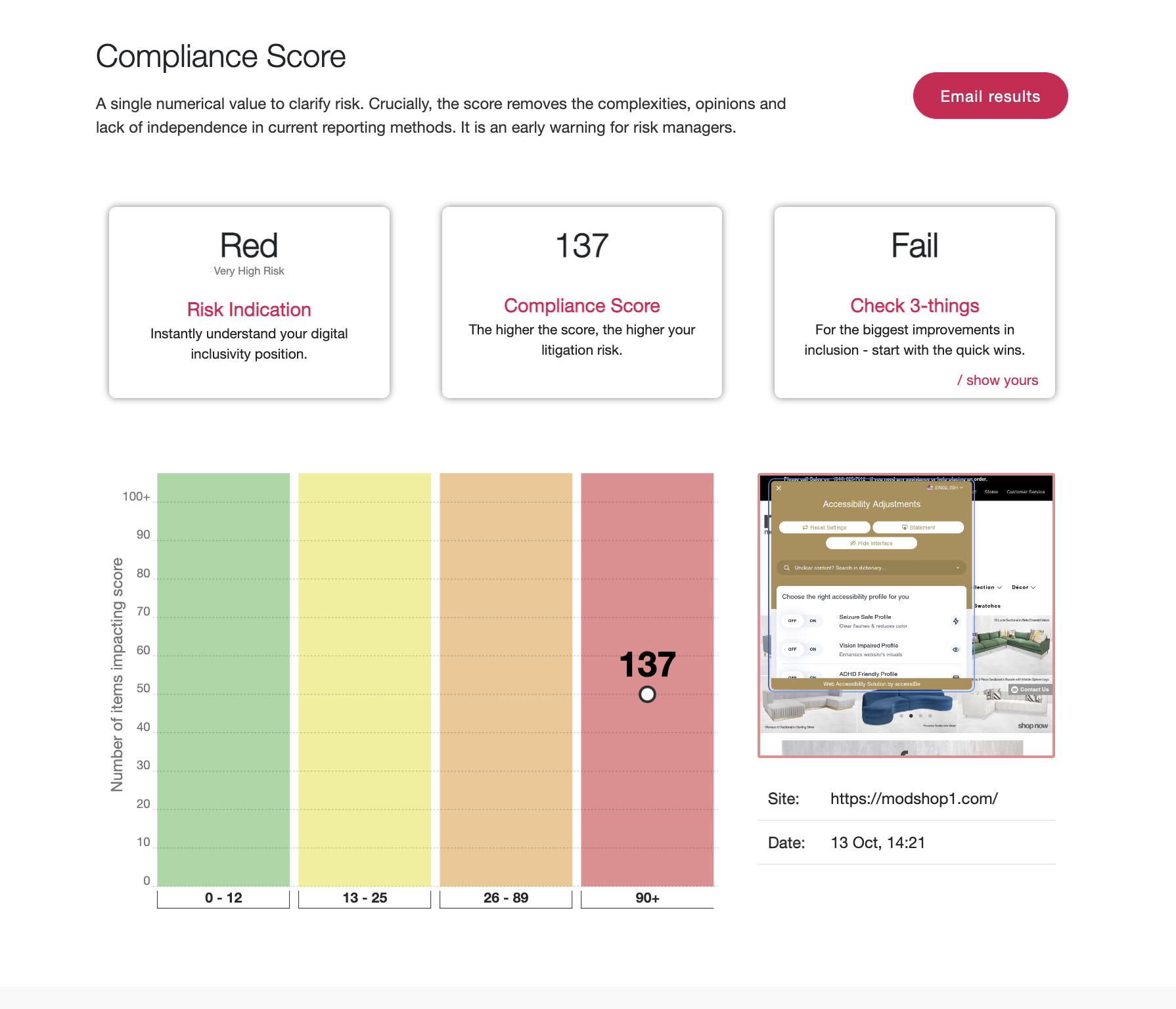
Modshop (opens in a new window) had a Compliance Score of 137 and ‘Red’ (Very High) Risk Indicator at the time of writing.